
Coaching & WOrKSHOPS in APPROACHES TO Field Recording, SCRIPTING, & CREATING SONIC GEOGRAPHIES

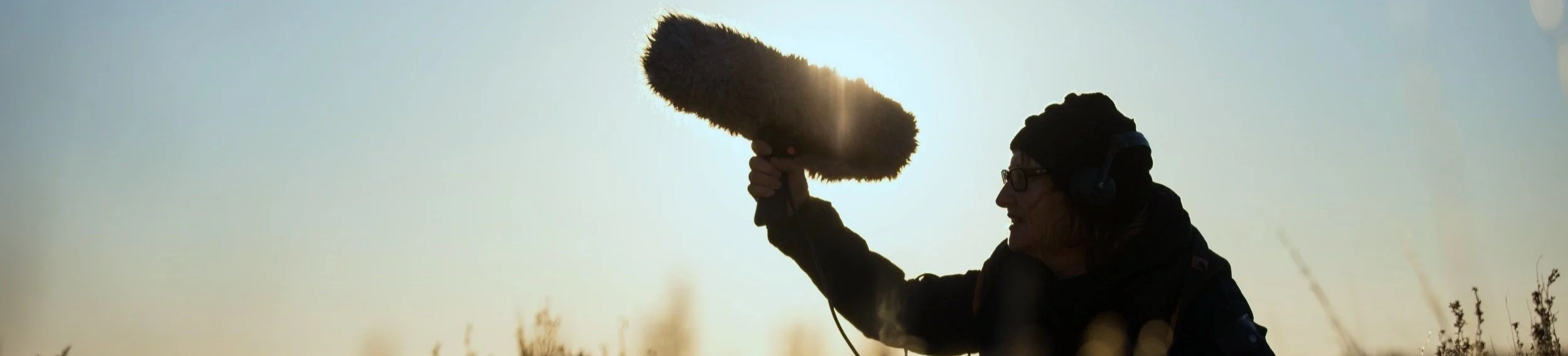
Recording a soundscape from a kayak at dusk on a high elevation ephemeral lake.
“I can't thank you enough for the coaching! It's been a brilliant experience.” Rosie Oliver, Tickertape Productions
Do you feel underconfident going out on location to record field sound for your latest production? Or do you want to learn more about how to get recordings that really capture the sonic geography of a place?
Perhaps you already have lovely field recordings - but no idea how to turn them into a finished piece.
I offer mentoring on the ‘how to’s’ of location recording and using those recordings in your work, both in one-on-one (remote) training or as part of audio/artist workshops.
Working on the principle that having the most expensive equipment is not necessarily the key … but how you use it.
See my article below for more on that topic…
The Best Field Recording Equipment?
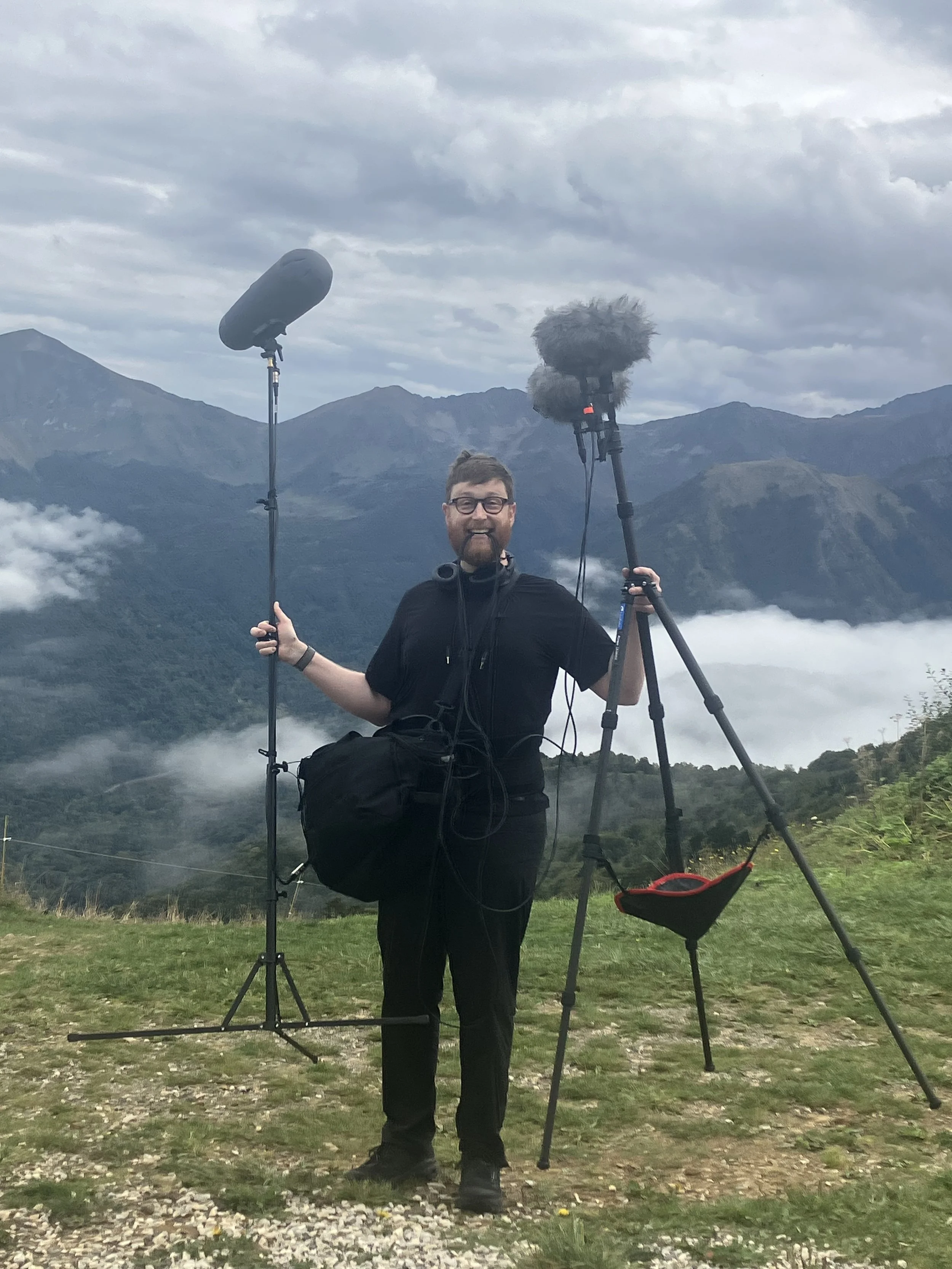
Alexander Overington https://www.overington.info/ at one of the CAMP Fr audio artist retreats in the French Pyrenees, with an impressive array of sound recording gear.
Recently I had the good fortune to spend a couple of weeks in the French Pyrenees, co-teaching a couple of workshops on field recording techniques at the CAMP Fr artist retreat. Participants had varied backgrounds in everything from documentary tv and music production, to audio feature making; there were also quite a few very creative sound artists. The variety in attendees interests and experience was matched by the equipment that they brought with them.
Two people arriving with no sound recording equipment at all, and used the facility’s loaner gear – basic hand-held Zoom recorders with built-in mics. Others arrived with everything from simple stereo mics or minature omnis, to an ORTF rig (two identical cardioid microphones, with a 17cm spacing, 110° relative to each other), mid-side and double mid-side arrays, to an Ambisonics 5-channel surround sound set-up. Some participants also used geophones and electromagnetic mics in creatively experimental ways. One afternoon I arranged a ‘usual suspects’ style lineup from simple to complex mic arrays, so that the less experienced participants could see what the different equipment looked like and learn what it could do.
Myself and co-teach Kate Carr led a series of field recording excursions, exploring the lovely village and wonderful countryside around the retreat centre. We recorded the church bells, a plethora of sheep, cattle and ponies with their chiming bells; how the soundscape changed at stops along an altitudinal gradient from the valley floor to a high col; a bustling Saturday street market in a nearby town; the sound of the wires of a ski lift vibrating; the burbling of a street drain and a mountain stream. One magical evening some of us managed to find and record the distant bellowing red deer stags and the gorgeous quavering hoots of a male tawny owl, while enveloped in complete darkness at 1500m above sea level.
At the end of each 5-day workshop, participants each presented a sound piece they’d made that week. And you might think that the quality of what they produced would have varied, at least a little, depending on the quality of their recording equipment. Not one bit of it! The pieces ranged from creative sound art to several beautiful nature/village soundscapes to wonderfully rhythmic music tracks; one singer created a gorgeous piece with improvised singing recorded over the background of breakfast at the retreat centre. Each was truly impressive.
Why am I telling you all this? Because it’s a great lesson in not getting too hung up on what recording equipment you use. Of course, higher quality equipment (for example some of the great mics made by Schoeps and Danish Pro Audio) is better for recording quiet natural soundscapes with low signal to noise, while the busy atmospheres of a street market can be recorded just fine with a budget hand-held recorder. A key takeaway came though, when a workshop participant reminded us all of a piece of venerable field recording advice.
The best field sound recorder – is the one you have with you!
It’s all very well to own top-of-the-range kit. But do you want to drag that large windjammer, mic stand, and delicate mic around with you all the time? There’s always the chance while you’re on a trip somewhere new and just popped out to the shops, or are out on your regular weekend woodland stroll, that unexpectedly you might just hear something marvellous.
One time I was at a hostel in Japan and stuck my head outside the door – to hear a ‘mikoshi katsugi’ (shrine carrying parade) at the end of the street – there was no time to get an elaborate recording set up in place, I had to run and grab it with a small hand-held recorder. This past Sunday I went for a drive to an ephemeral mountain lake in the high country of Arizona, which due to recent heavy rain is unusually wet for this time of year. I just wanted to relax. I didn’t want the bother of taking the Sound Devices Pre-Mix6, a ‘proper’ mic and such. Instead, I grabbed a binaural headset mic that plugs into my iPhone as I headed out the door. I ended up getting my best ever recording of a red-tailed hawk that appeared suddenly calling not that high overhead, followed by the sound of a solo chorus frog which normally only call en masse in the spring. In the chill of the November afternoon its rasps were incredibly slow, like the hinges of a creaky old door.
This kind of thing has happened to me so many times now, that I urge you to always have a small recorder in your pocket or bag. It could be one of the small Zooms, a Sony PCM 10, or a mic that plugs into your phone. Because any piece of kit is 'the best' compared to having nothing, the next time great sound happens when you least expect it.
What will you learn with some coaching?

LOCATION TECHNIQUES
Field recording requires very different skills from navigating a simple indoor guest interview. Whether you’re going out into nature or the middle of an urban jungle, I can help you learn how to get right into the sound field and capture realistic, immersive audio for your podcast.

CHOOSING THE RIGHT GEAR
Digital recorders, pro windshielding, mic stands, shock mounts etc - it can all be a bit daunting when you’re getting started. I can help you navigate the vast array of available gear and help you put together an affordable and useful kit.
Want to try immersive binaural stereo? This is an inexpensive dummy head array, fitted with miniature omni mics in the ears.

NAVIGATING WITH YOUR EARS
Getting great location sound isn’t just about having the right gear. Its about developing a more nuanced awareness of the world of sound around you, learning how to work with the acoustics of urban and natural spaces, as well as knowing when/how to move with your mics. With my coaching you’ll go out on a field recording project to hone your skills, and benefit from my expert tips and guidance.
Cost: One 1.5 hour introductory session, followed by 4 x 1 hour follow up personal coaching sessions (all remote) - includes a practical field recording assignment and email Q&A follow-up for US$1,200/GBP£900.
Client Testimonials…
“Diane took the time to understand and tailor her instruction to my needs. Through her, I gained a ton of valuable knowledge about equipment and best practices. In addition to technical skills, Diane helped boost my confidence as an aspiring producer in a competitive industry.”
Clarissa Marks, LA-based Audio Producer
“Working with Diane reinvigorated my passion for audio production … Diane shaped our sessions based on tangible projects and provided thoughtful, real-time feedback, allowing me to practice new skills in a hands-on way. The gems she shared about immersive field recording and mixing will forever stay with me.”
Stefanie Ritoper, Producer and Multimedia Journalist

ACROSS THE ANDES ON HORSEBACK
An extended audio postcard I made from the early days of my sound recordingn career, which aired on Resonance FM. Music from La Revancha del Tango by GoTan Project and Argentine folk musician Chaqueño Palavecino from the album Juan de la Calle.
Photo: Enjoying the view from Argentina on my horse ‘Floppy’ looking towards Chile and the Lanin volcano.